
To watch via Twitch
https://twitch.tv/crescentfortrougelive
To watch on YouTube
https://www.youtube.com/channel/UCY_yu6hzsG1yoisFBHvGm5A?view_as=subscriber
To watch on Facebook
https://www.facebook.com/cfruc/
If you would like to join our pre-service Zoom conversation at 10:00 am go to link below. Contact Marc for a passcode please. marc.cfruc@mymts.net:
https://us02web.zoom.us/j/85184672753?pwd=FNTc0iEmoxKOQWt5bbfH7Ax9Hmkyw7.1
POSTPONED – MORE SOON. Towards 2035 Workshop—The third session of our Towards 2035 workshops will be held on Saturday, June 5 from 10:00 a.m. – 12:00 p.m. (location TBD). We will be reviewing some feedback from our last meetings, considering our own trajectory, and continuing to name our “Why” for being now and into the future.
UPCOMING WORSHIP SERVICES
NOTE: Service is at 11:00 a.m. this week at Harrow United. Sunday, September 27, 2026—Creation Time 4 and Orange Shirt Sunday– Exodus 17:1–17 Water flows from the rock for the thirsty people in the desert. Psalm 78:1–4, 12–16 God has done marvellous things in the past; magnify God’s name today! Philippians 2:1–13 Let the same mind be in you that was in Jesus. Matthew 21:23–32 By what authority does Jesus act and teach? The scriptures remind us that God often chooses to work co-operatively with and through willing human beings. Ecological stewardship is a form of discipleship. Joint Service at Harrow at 11:00 a.m. (There will be no service at CFRUC) Jason Bone will be our guest speaker. “Feast” to follow the worship service.
Sunday, October 4, 2026—Creation Time 5 and World Communion–Exodus 20:1–4, 7–9, 12–20 God gives Moses the Ten Commandments. Psalm 19 The heavens declare the glory of God. Philippians 3:4b–14 Paul gives his testimony. Matthew 21:33–46 The parable of the landowner and the violent tenants. The Ten Commandments describe how to live in right relationship with God, with other people, and with the wider earth community, helping to safeguard the earth’s resources. 10:00 a.m. at CFRUC. 11:00 a.m. Harrow.
Sunday, October 11, 2026—Creation Time 6 and Thanksgiving–Deuteronomy 8:7–18 God will bring you to a bountiful land. Psalm 65 (VU pp. 782–783) God provides; the valleys shout and sing. 2 Corinthians 9:6–15 God loves a cheerful giver. Luke 17:11–19 Ten healed; one returns to offer thanks. This whole day is about the gifts of Creation. How does our stewarding of those gifts demonstrate our gratitude to God, even when we feel alone in giving thanks? Joint Service at CFRUC at 10:00 a.m. We will begin collecting non-perishable food items for our 1JustCity partners.
Sunday, October 18, 2026—21st Sunday after Pentecost–Exodus 33:12–23 God speaks to Moses face to face as a friend. Psalm 99 God is a ruler who delights in justice. 1 Thessalonians 1:1–10 We always give thanks to God for you. Matthew 22:15–22 Give to God the things that are God’s. When we think about “Creation,” we so often turn our attention to flora and fauna, but when was the last time you gave thanks for God’s gift of metal, as was used to create the coin in today’s gospel reading? We will be celebrating the sacrament of infant baptism. 10:00 a.m. at CFRUC. 11:00 a.m. Harrow.
Sunday, October 25, 2026—22nd Sunday after Pentecost–Deuteronomy 34:1–12 Moses dies and is buried in Moab.
Psalm 90:1–6, 13–17 O God, our help in ages past. 1 Thessalonians 2:1–8 We care for you like a nurse tenderly cares for her own children. Matthew 22:34–46 Love God; love your neighbour as yourself. Our “neighbours” are not only those who are around us today; our love of neighbour must include caring for the earth we leave behind for those who are yet to come. 10:00 a.m. at CFRUC. 11:00 a.m. Harrow.
Sunday, November 1, 2026–All Saints’ Day–Revelation 7:9–17 They will hunger no more and thirst no more. Psalm 34:1–10, 22 Taste and see that God is good. 1 John 3:1–3 What we will be has not yet been revealed. Matthew 5:1–12 The Beatitudes. Even when this realm of existence reaches its conclusion, the gifts of Creation do not end. The saints wave palm branches, arrive at springs of water, and rest among fruit-filled trees. 10 am at CFRUC. 11 am Harrow.
Sunday, November 8, 2026—Remembrance Sabbath–Joshua 24:1–3a, 14–25 Joshua challenges the people to choose God. Psalm 78:1–7 We will teach the next generation. 1 Thessalonians 4:13–18 God will raise the dead. Matthew 25:1–13 Parable of the 10 bridesmaids and the lamps. Psalm 78 is about teaching the next generation. How can we remember the stories of our ancestors and make better choices, being grateful and preserving the land for those to come? It may seem overwhelming, but if each person makes some changes, a new beginning is made. Joint Service at CFRUC at 10:00 a.m. There will be no service at Harrow.
Sunday, November 15, 2026—25th after Pentecost–Judges 4:1–7 The judge Deborah speaks to Barak. Psalm 123 (VU p. 847) We lift our eyes to you, O God. 1 Thessalonians 5:1–11 The day of God will come as a thief in the night. Matthew 25:14–30 The parable of the talents. The gospel invites us to use but not exploit Creation. In what ways might we, or do we, “live with respect in Creation” as A New Creed declares? 10:00 a.m. at CFRUC. 11:00 a.m. Harrow.
A THOUGHT FOR THE WEEK
Jim Palmer, Inner Anarchy
Contrary to popular Christian belief, many things now assumed to be essential to Christianity were never taught by Jesus at all. Some developed decades or centuries after his death. Others emerged from theological systems constructed around him. Others represent ideas that would have been foreign to the Jewish world he inhabited.
Jesus did NOT:
Believe in the God of religion. Jesus spoke of God intimately—as Father, presence, mercy, and the ground of a radically different way of being human—not the property of a religious institution.
Start Christianity. Jesus was a Jew living and teaching within Judaism. Christianity emerged as a distinct religious tradition through the communities and theological developments that followed him.
Ask people to worship him. The central movement of Jesus’ teaching was toward God & the kingdom of God. Doctrines concerning Jesus’ divine status developed within the Christian movement after his death.
Subscribe to the doctrine of original sin. The fully developed Christian doctrine of original sin belongs to later theological history, especially Western Christianity. Jesus never constructed a theology in which every human being entered existence guilty because of Adam.
Die in order to rescue people from God. The New Testament contains several interpretations of Jesus’ death, and later Christianity developed additional theories of atonement. Jesus did not teach the familiar formula that God needed to punish him so God could forgive everyone else.
Establish a hierarchy of “clergy” and “laity.” Jesus did not create the ecclesiastical professional class that later Christianity developed. In fact, his teaching repeatedly challenged status, domination, and prestige.
Hold the concept of biblical inerrancy. Jesus lived centuries before there was a Christian Bible, much less a modern doctrine declaring its original manuscripts entirely without error.
Create a theological orthodoxy. Jesus did not leave behind a creed, systematic theology, confession of faith, or doctrinal statement–those structures arose as communities tried to define legitimate belief.
Teach that women are subservient to men. The Gospel traditions repeatedly portray women as participants in Jesus’ movement and as people with whom he engages seriously, often in ways that challenged prevailing social and religious conventions.
Claim that humankind is separated from God. Jesus certainly spoke about sin, repentance, judgment, and reconciliation, but he did not offer the systematic doctrine that humanity exists in a metaphysical state of total separation from God.
Approve Paul’s New Testament teachings. Paul’s letters were written after Jesus’ death. Treating every Pauline theological formulation as something personally taught or endorsed by Jesus collapses two distinct voices into one.
Warn people that they could not trust themselves. Jesus certainly recognized the human capacity for deception and wrongdoing, but he also located moral transformation at the level of the heart rather than reducing goodness to external religious conformity.
Claim exclusive access to God. Whatever later Christianity concluded about Jesus’ unique identity, the Gospel tradition also presents relationship with God as something into which others are invited. The language of being God’s children was not ultimately restricted to Jesus alone.
The point is not that Jesus conveniently agrees with every modern post-Christian idea. He doesn’t. He belonged to an ancient Jewish world very different from ours, and we should resist remaking him in our own image just as much as Christianity has sometimes remade him in its own. The more interesting realization is that Jesus and Christianity are not interchangeable. Two thousand years of doctrine, institutions, creeds, hierarchies, biblical interpretation, political power, and cultural assumptions now stand between the historical figure of Jesus and what millions of people have been taught to call “Christianity.” Some of that tradition grew organically from attempts to understand him. Some of it went considerably beyond anything he is recorded as saying.
Questioning Christianity does not necessarily require dismissing Jesus. Sometimes it means meeting him again without everything Christianity eventually placed on his shoulders…
UPCOMING LEARNING OPPORTUNITIES AT CRESCENT FORT ROUGE AND HARROW
Orange Shirt Day and the National Day for Truth and Reconciliation
Orange Shirt Day/ National Day for Truth and Reconciliation, Wednesday 30 September; Day of Action for Missing and Murdered Indigenous Women, Girls and Two-Spirit People, Sunday October 4. These two very significant days for committing to action for right relations are coming up soon. We will have resources for all ages posted next week. Your local planning and partnerships for and with all ages are the most important contribution.
The National Centre for Truth and Reconciliation is offering dedicated and free educational programming: Lunch and Learn series Sept. 21-25, 2026 as part of Truth and Reconciliation Week.
Orange Shirt Day and the National Day for Truth and Reconciliation call us to listen, reflect, and act—including acknowledging the Church’s role in the residential school system and its responsibility to pursue justice, healing,
reparations, and reconciliation. As a church, we acknowledge the harms caused by the Residential School system and its ongoing impacts on First Nations, Inuit, and Métis communities. We remain committed to walking the path of truth, justice, healing, and right relations through continued learning and meaningful action.
We are planning a number of events to help us walk on the path to reconciliation. On Sunday, September 27, we are holding a joint worship service at Harrow beginning at 11:00 a.m. Jason Bone will be our guest speaker. A “feast” will follow the service. Everyone is invited to wear orange.
On Tuesday, September 29, beginning at 7:00 p.m., Harrow will be hosting an evening with Brenda Gunn, law professor at U of M, who will be talking about her most recent work.
On Wednesday, September 30, from 1:30 to 3:30 p.m., Harrow will also be hosting an online discussion of Murray Sinclair’s book Who We Are: Four Questions For Life and Nation. Details for joining the meeting will be posted next week.
We are encouraging folks to take a self-guided walking tour of Rooster Town—maps and additional information are available on the Harrow website or through the church office.
Kairos will be holding a blanket exercise at Harrow in November. Watch for more details about dates and time.
“We are all Treaty People” is an event organized and funded by Prairie to Pine Region of The United Church of Canada, the Anglican Diocese of Rupert’s Land, Mennonite Central Committee Manitoba, and Winnipeg Quakers, in partnership with The Treaty Relations Commission of Manitoba. The purpose of this event is to bring Indigenous folk, Settlers and Newcomers together to celebrate and honour our relationship with one another under the treaties signed by our ancestors. This year the event will feature Niigaan Sinclair, Allen Sutherland, Don Amero, Anne-Marie Williott, Ryan
Richard, and Hinode Taiko Drummers. These are speakers, singers, dancers, and drummers (Japanese drummers). There will also be games and activities for all ages, crafters selling their wares and information tables. There will be food and ceremony as well. The date is September 20 from 1:00 to 4:00 p.m. at the Forks-National Historic Site, Centre Field. Pipe and Water Ceremony at 12:15 p.m. For more information, please contact Irene
Greenwood(imgreenwood@shaw.ca) or Mary McNairnay (jmcnairnay@mymts.net; 204-612-0261).
- Explorations—our online spirituality group resumes on Wednesday, September 9 at 10:30 am. The recurring link is https://us02web.zoom.us/j/84221433277?pwd=09cVcOq3YSBx6C0EYwQwF7PZqE2bsn.1. Contact Marc at
(204) 461-1767 for more information.
OTHER
Choir Rehearsal — is every Friday at 10 am. New members are welcome. If you are interested in singing with our choir, even occasionally, and Friday morning rehearsals present a barrier, other arrangements are possible. Contact Michael Cutler at organmike@gmail.com for more information.
We are continuing to collect non-perishable food stuffs for our 1JustCity partners. Hygiene Items for shower (soap, any size shampoo), coffee, white sugar, white flour and cooking oil. Items can be left at CFRUC on Friday mornings when Terry is in the office. Look for the Blue Box marked “1 Just City”. Please note: bottled water and sunscreen are not needed as the City of Winnipeg has supplied them. Of course, socks and underwear are also always needed.
Friday Mama Bear Clan Walk – A few of us have experienced walking with the Mama Bear Clan this Fall enjoying the milder weather. As well as the sandwiches that are made on site, we have had extra muffins and cookies to offer. When the word “homemade” is mentioned, eyes light up. Last Friday was chillier and we had many requests for mittens. We don’t have room for a mitten tree, but there will be a turquoise box at the back of the Sanctuary to hold donated mittens or gloves. New, gently used, adult or kid-sized, all are welcome. Thank you!
Take action for Guaranteed Livable Income – Everyone deserves to live with dignity. Across the country, people are struggling to afford basic necessities. That’s why the United Church is calling on the federal government to create a Guaranteed Livable Income program. It’s a practical, compassionate solution that would help ensure no one is left behind. By providing a consistent income floor, it can reduce poverty, improve health outcomes, and give people the stability they need to thrive.
You can help make this change happen. We’ve made it easy to contact the Senate Committee that is reviewing Bill S-206 for the creation of a Guaranteed Livable Income. Add your voice today with just a few clicks: https://united-church.ca/social-action/act-now/create-guaranteed-livable-income-program
Together, our voices can help build a more just and compassionate Canada.
Our Faithful Readers Book Discussion Group is open to everyone, and we usually meet the last Wednesday of the month via Zoom, except for the movies and our windup dinner. If you are interested, please contact the office for the Link. Pick up a Bookmark at Harrow for times, etc.
Composting is an act of faith. It requires trust in the hidden work of bugs, microbes and the natural processes of decay to convert old food into nourishment for new life. Lent is a time of preparing ourselves for the new life God offers at Easter. We are invited to look at our lives and communities of faith and ask – What needs to be composted so that we are ready for resurrection? Click here to read this article by our Growth Animator, Jordan Cantwell.
Be Part of the Migrant Justice Network!
The United Church of Canada Migrant Justice Network will meet both during the day and in the evening over the next five months, to try to ensure as many people as possible can participate. Are you passionate about supporting migrant justice and improving living conditions for migrants in Canada? The United Church of Canada’s Migrant Justice Network invites you to be a part of our collective efforts to advocate for international students, refugees, asylum seekers, immigrants, and migrant workers. We welcome anyone aligned with the concerns of (im)migrants in Canada and globally. Learn more, and register on CHURCHx.
New Blog! Becoming an Intercultural Church: Learning to Stay with One Another. Many communities of faith are living in an “in-between” time—marked by change, uncertainty, and grief. In a new blog, Rev. Hyuk Cho invites us to see this moment not as a problem to fix, but as a season of transformation. Drawing from his upcoming book, Cho explores intercultural becoming—a way of life rooted in companionship, honesty, and a willingness to be changed through relationship. Read the full blog and learn more about the upcoming Becoming an Intercultural Church course on CHURCHx
What is Spirituality?
“Spirituality involves the recognition of a feeling or sense or belief that there is something greater than [one]self, something more to being human than sensory experience, and that the greater whole of which we are part is cosmic or divine in nature.
“Spirituality means knowing that our lives have significance in a context beyond a mundane everyday existence at the level of biological needs that drive selfishness and aggression. It means knowing that we are a significant part of a purposeful unfolding of Life in our universe.
“Spirituality involves exploring certain universal themes – love, compassion, altruism, life after death, wisdom and truth, with the knowledge that some people such as saints or enlightened individuals have achieved and manifested higher levels of development than the ordinary person. Aspiring to manifest the attributes of such inspirational examples often becomes an important part of the journey through life for spiritually inclined people.”
What happens at Sunday morning Worship? Lots!
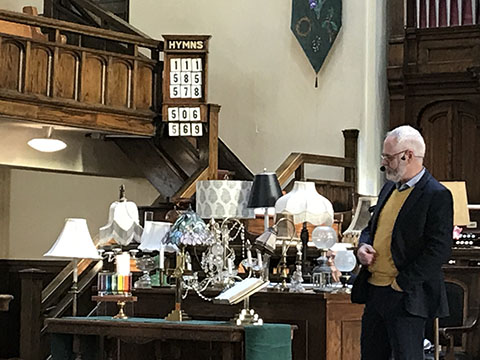
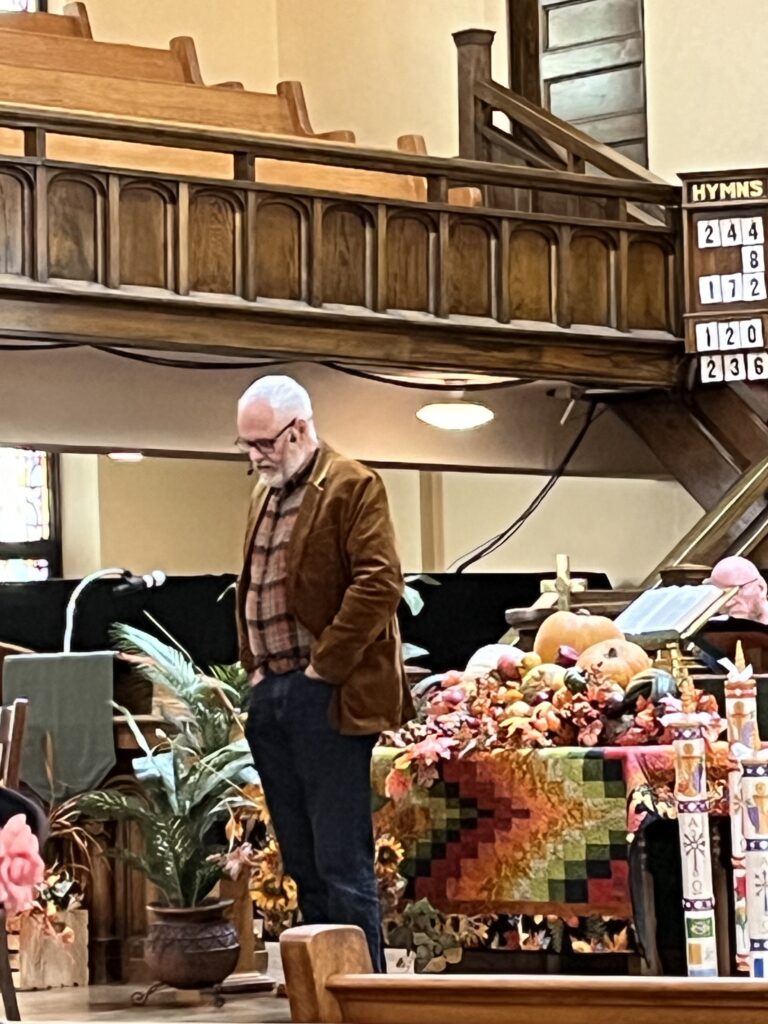
Sunday morning worship at Crescent Fort Rouge generally follows a predictable pattern of gathering in God’s name; hearing and reflecting on the intersection between the ancient faith story and the story of our own lives and time; responding to what has been heard; and going out with a commission to be actively engaged in the world.
Our worship respects the rich heritage and traditions of the Christian faith, while holding up a progressive and contemporary theology. Our worship is designed to actively engage all of the senses, and welcome the participation of all. We come together around the Lord’s Table through the sacrament of communion six or seven times a year.
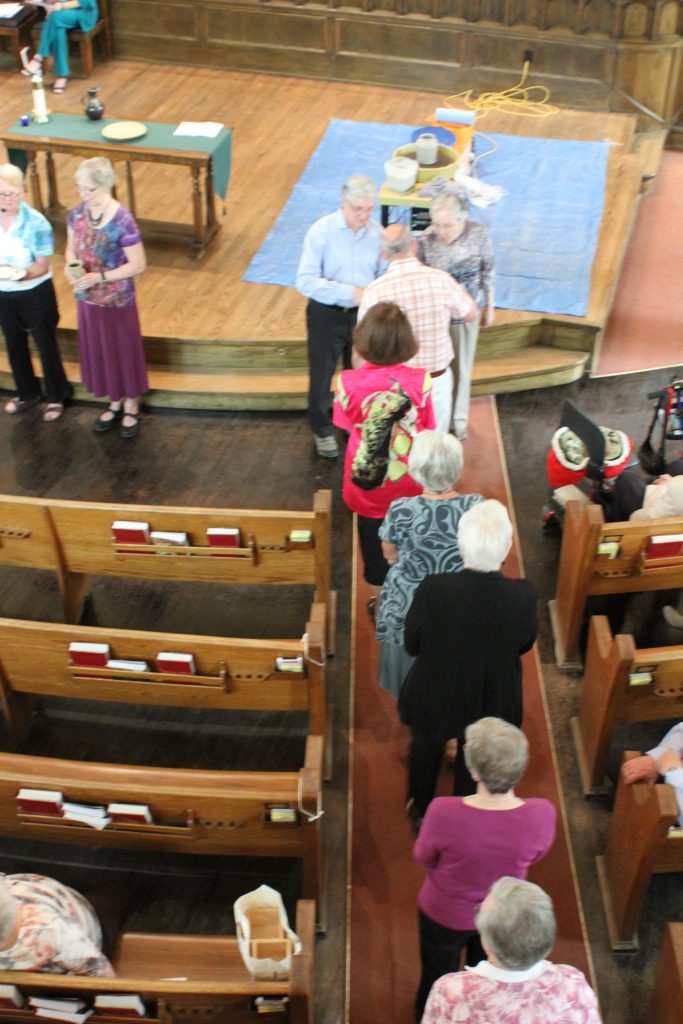
Music is an integral part of our worship life, and we offer music in a wide range of styles and genres. Worship allows us to enact through ritual, story-telling, music and prayer our core belief in a God of peace, justice, compassion, healing and hope who invites us to practice the same things.
Why Worship? Worship reminds us of who we are and whose we are. Worship helps reinforce a rhythm for our lives. Worship offers a chance to connect with others and to feel that connection and engagement. Friendships are formed!

Occasional Services
In addition to regular Sunday morning worship, we also offer worship experiences at other times to mark special days or occasions. These include such things as Pet Blessings, Blue Christmas services, Christmas Eve, Ash Wednesday and Good Friday.
Services for Life Transitions
CFRUC provides opportunities to recognize significant life passages with ritual and celebration such as Baptism, Confirmation, Weddings and Funerals.
Services to Recognize Other Life Transitions
We also work with individuals to create meaningful rituals to mark significant life passages such as moving to a new home, divorce, miscarriage, adopting a child, or seeking healing after trauma or violence.
Please contact our minister if you would like to explore some of the possibilities. cfruc@mymts.net
Daily Prayer Resources
In many faith traditions, it is customary to pray at specific times of day. The discipline of morning prayer allows one to start a day grounded in God, and the intention to be mindful of God’s presence in all that unfolds.
Prayer of Examen
The prayer of examen, is a traditional form of “end of day prayer” which invites reflection on the day that is past, an expression of gratitude for what has been experienced, and an opportunity to explore in greater depth God’s presence in our lives. Our friends at The Work of The People https://www.theworkofthepeople.com/ have created a contemporary expression of this ancient form of prayer. For a version of the Examen, please click here.
Frederick Buechner
www.frederickbuechner.com
The Center for Contemplation and Action
cac.org
Sacredise
Sacredise.com
One time tested way of nurturing the spirit is to maintain the disciple of keeping a journal. During this time of self-isolation we invite you to join others in a 28 day journaling challenge. Click here for a list of daily prompts. Self-Isolation Challenge
Looking for more intentional study?
A variety of online programs and webinars are available through:
The Abbey of the Arts
https://abbeyofthearts.com/
The United Church of Canada
https://www.united-church.ca/
We encourage you to contact Crescent Fort Rouge and receive our weekly newsletter which offers many opportunities. cfruc@mymts.net
Looking for an experience on Sunday for children (ages 3 to 12)?
Children are encouraged to begin their Sunday morning church experience with the gathered community in worship. This time with adults includes a theme conversation with one of the ministers and introduces children to the concept of worship.
Following this time, the children participate in age appropriate activities designed to introduce them to faithful living. We make use of a variety of teaching activities: drama, music, cooking, art, science, games and more. Parents and guardians of very young children are welcome to attend this program with their young ones until the children feel comfortable enough to attend the class on their own.
